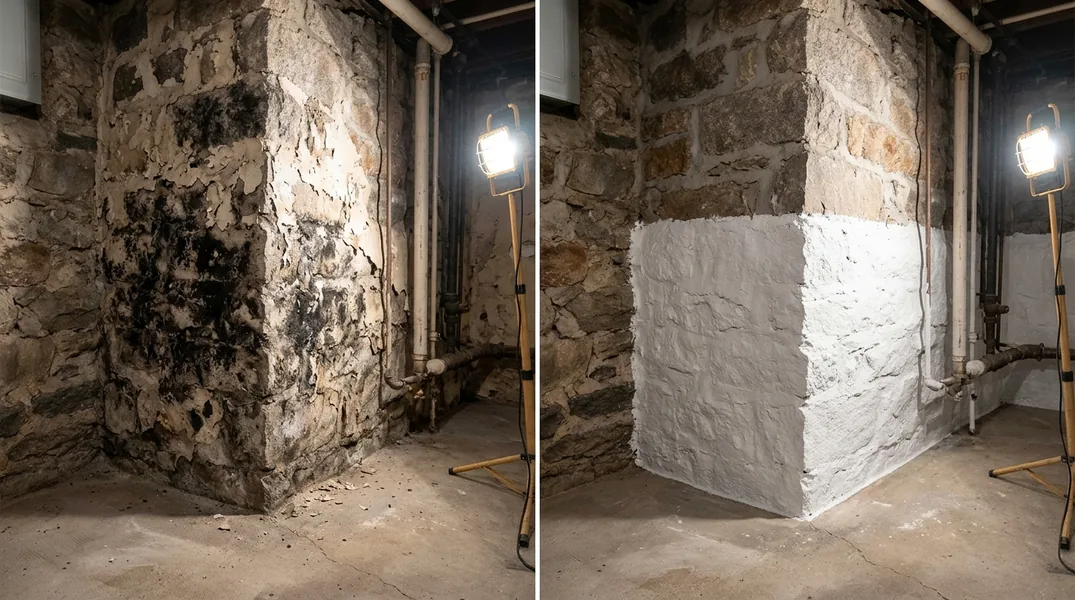
Why Lowell Homeowners Face Basement Water Problems
If you live in Lowell, you already know that our region gets its fair share of rain, snowmelt, and spring thaw. The city's older housing stock, combined with clay-heavy soils and a high water table in many neighborhoods, creates ideal conditions for basement seepage. Whether your home is a century-old triple-decker near the river or a mid-century ranch on a slab, water finds a way in through foundation cracks, porous concrete, and failed exterior coatings.
The real question isn't whether you need Basement Waterproofing, but which approach makes sense for your specific situation. Homeowners across Lawrence, Methuen, and Andover ask us the same thing: should I waterproof from the inside or the outside? The honest answer is that both methods work, but they solve different problems and come with different trade-offs. Understanding those differences is the key to making a smart decision for your home and your budget.
How Interior Drain Tile Systems Work
An Interior Drain Tile System is installed along the inside perimeter of your basement footing. The process involves breaking up a narrow strip of the concrete floor, digging a trench down to the footing, and laying perforated pipe that channels water to a sump pit. A sump pump then discharges the water away from your home. The system is typically covered with new concrete, and the walls are often sealed or fitted with plastic vapor barriers to manage humidity.
The biggest advantage of interior waterproofing is that it can be done year-round, regardless of weather, and it doesn't require excavating your yard, driveway, or landscaping. For many Lowell homeowners with finished or semi-finished basements, this is a practical way to protect living space without tearing up the exterior. It also addresses hydrostatic pressure from below the floor, which is a common issue in older neighborhoods where the water table sits high. The main limitation is that it manages water after it enters the foundation wall, rather than stopping it at the source.
What Exterior Basement Waterproofing Involves
Exterior Basement Waterproofing tackles the problem from the outside. This typically means excavating down to the footing, applying a waterproof membrane or coating to the foundation wall, installing drainage board, and adding exterior drain tile that leads to a sump or gravity drain. In some cases, the soil is regraded to slope away from the house, and downspouts are extended to discharge water well away from the foundation.
When people compare drain tile vs exterior membrane, the exterior approach is often considered the gold standard because it stops water before it ever touches the foundation wall. It also relieves lateral soil pressure, which can prevent bowing and cracking over time. However, it requires heavy excavation, which means digging up decks, patios, walkways, and landscaping. It's also weather-dependent and generally more expensive. For homes with serious structural issues or persistent seepage that interior systems haven't solved, exterior Foundation Waterproofing can be the more durable long-term fix.
Interior vs Exterior Waterproofing: A Side-by-Side Comparison
So how do you choose? The right answer depends on what's causing the water, how your basement is used, and what your budget allows. Interior systems are usually faster to install, less disruptive to your property, and more affordable upfront. They excel at handling water that comes up through the floor or seeps through block walls. Exterior systems are more comprehensive and address the root cause, but they come with higher labor costs, longer timelines, and significant excavation.
For a homeowner in Middlesex County with a finished basement and minor seepage, an interior drain tile system with a quality sump pump is often the most cost-effective solution. For a home with visible foundation damage, chronic flooding, or a history of failed interior fixes, exterior waterproofing may be the better investment. Many homes actually benefit from a combination of both approaches, especially older properties where multiple water pathways exist. A professional assessment is the only way to know for sure. If you're unsure which route fits your home, reach out for a free estimate and we'll walk you through the options.
Basement Waterproofing Cost in Lowell: What to Budget
Cost is naturally a major factor in this decision. Interior drain tile systems in the Lowell area typically range from a few thousand dollars for a basic perimeter system to more if you add a premium sump pump, vapor barrier, or dehumidifier. Exterior waterproofing generally costs more because of excavation, disposal, and restoration work, and the final price depends heavily on access, soil conditions, and how much of the foundation needs treatment. Homes with finished landscaping or hardscaping on top of the foundation perimeter will see higher exterior costs.
It's important to compare apples to apples. A cheap interior system with a low-quality pump may cost you more in the long run through repairs and water damage. Likewise, an exterior job that doesn't address grading and downspouts may leave you with the same problem a few years later. We recommend getting a detailed written scope of work and asking about warranties, pump quality, and discharge locations. For a clearer picture of what to expect, you can review our pricing or call (978) 788-0721 to discuss your specific basement.
Basement Waterproofing Near Me: When to Call a Pro
If you're searching for basement waterproofing near me, you're probably noticing one or more warning signs: damp walls, a musty smell, efflorescence (white powder on concrete), standing water after storms, or cracks that seem to be widening. These are not problems that improve on their own. In fact, small leaks often lead to bigger issues like mold growth, ruined flooring, and foundation deterioration. The earlier you address them, the less expensive the fix tends to be.
A local professional can identify whether your water is coming from hydrostatic pressure, surface runoff, gutter problems, or foundation failure. That diagnosis determines whether interior vs exterior waterproofing is the right call. At Lowell Waterproofing, we serve homeowners throughout Lowell and the surrounding communities, and we're happy to inspect your basement, explain your options in plain language, and provide a written estimate with no pressure. Call (978) 788-0721 or visit our free estimate page to get started. Your basement is a valuable part of your home, and keeping it dry is one of the best investments you can make.
Looking for a professional basement waterproofing contractor in Lowell? Lowell Waterproofing responds fast for all your basement waterproofing needs.
Get a Free QuoteOur services: Basement Waterproofing · Interior Drain Tile System · Exterior Basement Waterproofing