



Foundation Waterproofing in Lowell: Built for Mill-Era Walls and River-Floodplain Water Tables
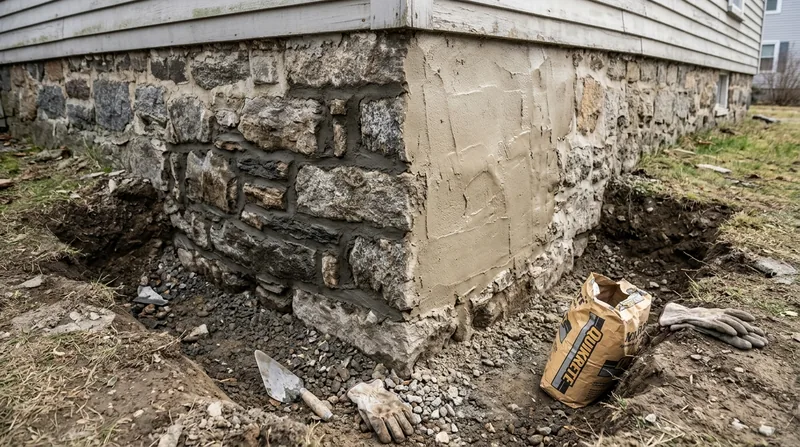
When Lowell homeowners search for Foundation Waterproofing in Lowell, the problem is almost never a single crack. It is a 150-year-old fieldstone wall in the Acre or Centralville that has been drinking Merrimack River floodplain water every spring since the mill era. The ground here is glacial till and river outwash sand and gravel, with schist and granite bedrock sitting close to the surface up in the Highlands and Pawtucketville. That combination pushes hydrostatic pressure against basement walls all year and surges it every March when snowmelt hits the river. We specialize in matching the repair to the foundation you actually have, whether that is hand-laid stone, early brick, block, or poured concrete. If your basement takes on water after every nor'easter, start with a free basement inspection so we can see where it is entering.
Why Foundation Waterproofing Matters So Much in Lowell's Older Neighborhoods
Lowell's building stock is the reason this work is different here than in a 1990s subdivision off the outer streets. The 1840s to 1900s brick and frame mill-era workers' housing and triple-deckers in the Acre, Centralville, Belvidere and Pawtucketville were built with fieldstone, brick, or early block walls and old clay footing drains that are now crushed, root-filled, or simply gone. Those walls were never damp-proofed the way a modern poured foundation is. Water moves through the mortar joints, shows up as efflorescence on the interior face, and eventually softens the parging until it falls away in sheets.
- Fieldstone and brick walls wick groundwater and lose mortar over decades of freeze-thaw cycles.
- Original clay weeping tile at the footing collapses or silts in, so water has nowhere to go but into the basement.
- River outwash sand and gravel along the Merrimack and Concord hold a high water table that rises every spring.
- Hillside homes on schist and granite get surface runoff that sheets down slope and loads the uphill wall.
- 1950s to 1970s Capes and ranches on the outer streets often have partial basements with shallow footings and thin parging.
Each of these failure modes calls for a different repair, and treating a hydrostatic pressure problem as if it were a cosmetic crack is how homeowners end up redoing the same wall twice.
Key info: A triple-decker on a fieldstone wall in Centralville that seeps every March is not the same job as a 1980s poured basement in a Belvidere subdivision that leaks at a tie rod hole. The first needs drainage correction and repointing. The second may only need epoxy or polyurethane injection. We tell you which one you have before anyone quotes a number.
Permits for structural foundation work and for anything that alters drainage or the sanitary connection of a sump discharge vary by jurisdiction, so we always point homeowners to the City of Lowell building department to confirm what applies to their address. You can review the city's permit information at lowellma.gov before work begins.
How We Approach Foundation Waterproofing on Lowell's Stone, Block, and Poured Walls
We start below grade and work outward from the actual source of the water, not from the stain on the floor. On a mill-era stone wall, that means repointing the mortar joints with a period-appropriate mix, restoring parging where it has failed, and then deciding whether the wall needs a breathable crystalline treatment or a membrane. On a poured wall with a working footing drain, it often means crack injection and grading correction rather than excavation. The order matters, and we do not skip the diagnostic step to sell a bigger job.
- We walk the interior perimeter and map every entry point: wall seepage, cove joint, tie rod holes, window wells, and floor cracks.
- We check the exterior grade, downspout discharge, and window well drainage to see how much surface water is being delivered to the wall.
- We evaluate the footing drain condition and the water table behavior on your street, especially in the river floodplain.
- We recommend the least invasive repair that actually solves the problem, and we say plainly when simple crack sealing is enough.
- We execute the work with repointing, parging, injection, membrane, or drainage correction matched to the wall type.
On a recent job in Pawtucketville, a homeowner had been patching a stone wall with hydraulic cement for three springs. The real issue was a collapsed clay footing drain and a downspout dumping at the corner. Repointing alone would have failed again by the next thaw. For jobs where the water is coming up through the floor rather than through the wall, the better answer is usually an interior drain tile system tied to a sump basin, and we will tell you that directly.
Key info: In the Highlands, we regularly find 1920s two-family homes where the uphill wall is bowed slightly and the mortar is crumbling from hydrostatic pressure. That is a structural issue first and a waterproofing issue second, and it needs a bowing wall repair evaluation before any membrane goes on.
Foundation Waterproofing Methods We Use in Lowell
Not every wall gets the same treatment. The table below shows the approaches we use most in Lowell and the foundation types each one fits. We choose based on wall material, water source, and how much hydrostatic pressure the site generates.
| Approach | Description | Best for |
|---|---|---|
| Repointing and parging | We cut out failed mortar and restore the parging with a mix matched to the original wall. | Fieldstone and brick mill-era walls with surface deterioration. |
| Epoxy or polyurethane injection | We drill injection ports and seal active cracks from the inside. | Poured and block walls with discrete, non-moving cracks. |
| Membrane and crystalline treatment | We apply a waterproof membrane or crystalline coating to the wall face. | Walls with broad seepage and no single dominant crack. |
| Drainage correction | We restore footing drain function, extend downspouts, and regrade the soil. | Homes where surface water and a failed footing drain drive the leak. |
| Interior perimeter drain | We install an interior drain tile system that relieves hydrostatic pressure at the cove joint. | High water table sites where exterior excavation is impractical. |
We will always tell you when the cheaper method is the right one, and when it is not, because a repair that fails next spring costs more than doing it correctly once.
Foundation Waterproofing Cost in Lowell: What to Expect
Foundation waterproofing pricing in Lowell starts from $3,500 for a focused repair, and that figure reflects the reality of working on old stone and brick walls rather than a clean poured foundation. A single crack injection on a poured wall in South Lowell sits at the low end. A full interior perimeter drain with a sump basin in a Centralville triple-decker runs considerably higher because of the wall length, the cove joint detailing, and the discharge line routing. The variables that move the number most are wall type, total linear footage, whether the footing drain needs replacement, and how much repointing and parging the stone work requires.
Access matters too. A basement with a narrow bulkhead and a finished ceiling costs more to work in than an open one. Homes on the hills where bedrock sits close to the surface can complicate exterior drainage work. We give you a written scope with the price so you can compare line by line, and we recommend getting two or three estimates on any job of this size. You can see how we structure pricing on our full pricing overview.
Hiring a Foundation Waterproofing Contractor Near Me in Lowell: What to Check
When you search for foundation waterproofing near me in Lowell, the results will include general foundation-repair firms, plumbers, and dedicated waterproofing specialists. They are not the same trade. A plumber handles the sump discharge connection but not the wall. A general foundation firm may push structural work when the real problem is drainage. Ask each contractor what they specialize in and whether they will put the diagnosis in writing.
Confirm licensed and insured status and ask for a certificate of insurance before work starts. Get two or three written estimates with the same scope so you are comparing like for like. Ask for local references on homes with the same wall type as yours, not just any job. And confirm who pulls the permit if structural foundation work or a sump discharge alteration is involved, because requirements vary and the City of Lowell building department is the authority on your address. We are happy to walk through all of it on a free estimate with no obligation to book.
If you are in Lawrence, Methuen, or Andover and the same river-floodplain water table is working on your walls, the approach is the same. We serve the surrounding Merrimack Valley and bring the same diagnostic-first method to every foundation type. Call (978) 788-0721 to get on the schedule before the spring thaw.
Foundation Waterproofing in Lowell: Pricing Guide
| Service | Price | Details |
|---|---|---|
| Foundation crack injection (single crack) | Starting at $3,500 | Epoxy or polyurethane injection on a poured or block wall, includes port drilling and sealing. |
| Repointing and parging (stone or brick) | Starting at $4,200 | Mortar joint repair and parging restoration on mill-era walls, priced by linear footage. |
| Interior perimeter drain with sump basin | Starting at $7,500 | Full interior drain tile, sump basin, pump, and discharge line for hydrostatic pressure sites. |
| Membrane or crystalline treatment | Starting at $5,000 | Wall face treatment for broad seepage, includes surface prep and any needed parging repair. |
| Complex or large-scale job | On estimate | Multi-wall drainage correction, footing drain replacement, or bowed wall conditions need an on-site look first. |
| Estimate | Free | Written scope and price, response within 24 hours at (978) 788-0721, no obligation. |
Indicative pricing, the exact cost depends on square footage, finish, and site access. Free personalized estimate within 24h at (978) 788-0721.


